Friday, December 18, 2015

A Rankin/Bass Holiday: The Year Without a Santa Claus

Onto another holiday special by Rankin/Bass Productions. Here is 'The Year Without a Santa Claus'.

Much like Rudolph, this was inspired from an original story (a children's book) of the same name by Phyllis McGinley in 1956. It would later be made into a special for ABC in 1974, being released two weeks before Christmas itself. There isn't too much else about the history for the special, aside from it being changed in places, but that's adaptions for you.
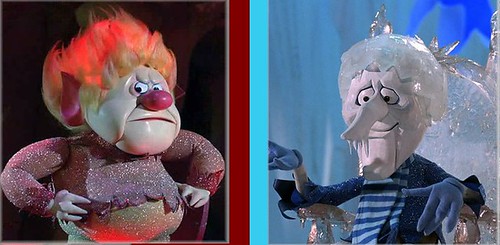

(These guys? Yes, they were adapted into the special and I'll get to them)

Anyway, the story is actually told by Mrs. Claus herself, explaining how her husband has been feeling under the weather after the Thanksgiving holidays (who wouldn't be?). With advice from the doctor to stay in, as well as the notion that many people may not appreciate Christmas anymore, Santa Claus decides to take his own holiday to avoid the trip.

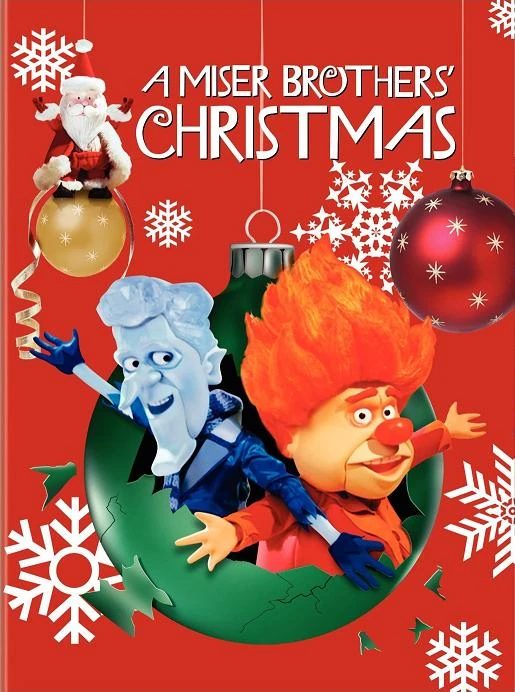
Not wanting to let her husband become disillusioned enough to let Christmas being permanently canceled, Mrs. Claus enlists the help of two elves, Jingle and Jangle. She wants the pair to head out into the world to find people who still believe in Santa Claus and his work. Riding the reindeer Vixen, the pair end up getting in between a fight by the Misers, Snow Miser and Heat Miser.

You can probably figure out who is which.

Anyway, the elves and the reindeer get shot down and end up in South Town in the Southern United States (which one? don't know. wasn't brought up in the special). It isn't too long afterwards that the sunny town turns against them, with meeting a kid who says he doesn't believe in Santa Claus and the police who has the elves arrested and the reindeer put into jail. For the local law enforcement, they believe them to be strange criminals.

(Then again, they do stick out oddly)

Mrs. Clause gets a hold of things by freeing the elves from prison, while Santa takes care of Vixen due to the reindeer getting a fever in hot weather. When the mayor of South Town puts the Mrs and the elves to the challenge of making it snow in South Town (which has never happened before), the group decides to take it up to bring back faith in Santa Claus while the titular man rests himself.

This requires seeing both of the misers, Snow and Heat. The former controls the actual snow, while the latter has South Town under his domain. This requires the Mrs. to see with the misers' mother instead. Mother Nature, to be more precise.

However, the real highlight of those visits are the songs.

(Really, no other explanation is needed)

Quicker than you can say, "Well, that was easy", Mother Nature has the misers agree to the plan: have Snow Miser bring the snow to South Town, while Heat Miser can bring some sunshine to the North Pole.

Eventually, news spread across the world of Santa Claus taking a break from Christmas this year. Santa himself ends up getting letters and even presents from children wishing for the best of the red suited man. Santa, touched by the kindness and generosity from the people of Earth, recovers and manages to perform his yearly flight, even stopping by South Town before the end credits roll.

Final Thoughts:

This was actually a chore to get through. It wasn't necessarily bad, but certainly was boring. Most of the character designs seemed to be standard fare for the Rankin/Bass stop motion, aside from a few. The story itself, while had some touchy moments, seemed to fly about in its mood. What could count as a climax to the Miser Bros subplot got wrapped up pretty quickly, far more quickly than some would like.

Actually, the Miser Bros may be the only saving grace of the special. Their designs were so out there, people immediately latched on to them for it. Not to mention they were sort of relocatable by being bickering siblings. Add in a catchy song between the pair and you've got some popular extras in an otherwise decent special.

(The ability to carry their own movie...I might tackle that later)

I'll be wrapping up the holiday with another origin story for Santa Claus, brought to you by the creator of the 'Wizard of Oz'.

Until next time...

Friday, December 11, 2015

A Rankin/Bass Holiday: Santa Claus is Comin' to Town

Welcome to another post for the 'Rankin/Bass Holiday'. Up next on the list is a special that deals with the origins of Santa Claus himself...well, at least one of them.

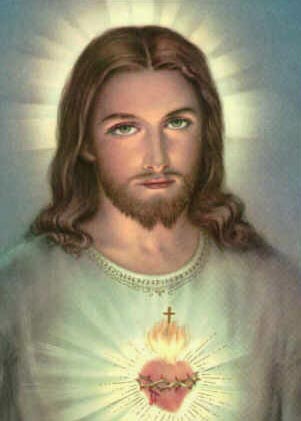
Inspirations for the man can be traced to different figures in history and folklore: Saint Nicholas from the 4th century, who lived during that time in Turkey and gave gifts to the poor; Odin from Norse Mythology, who is often said to appear during the Yuletide festitives of a 'Great Hunt'; Sinterklaas, a Dutch figure who can be considered the proto-Santa Claus. It wasn't too long before such a figure became part of Christianity, often times becoming more of the figurehead on Christmas itself, instead of Jesus Christ.

(Sorry for that.)


(No problem.)

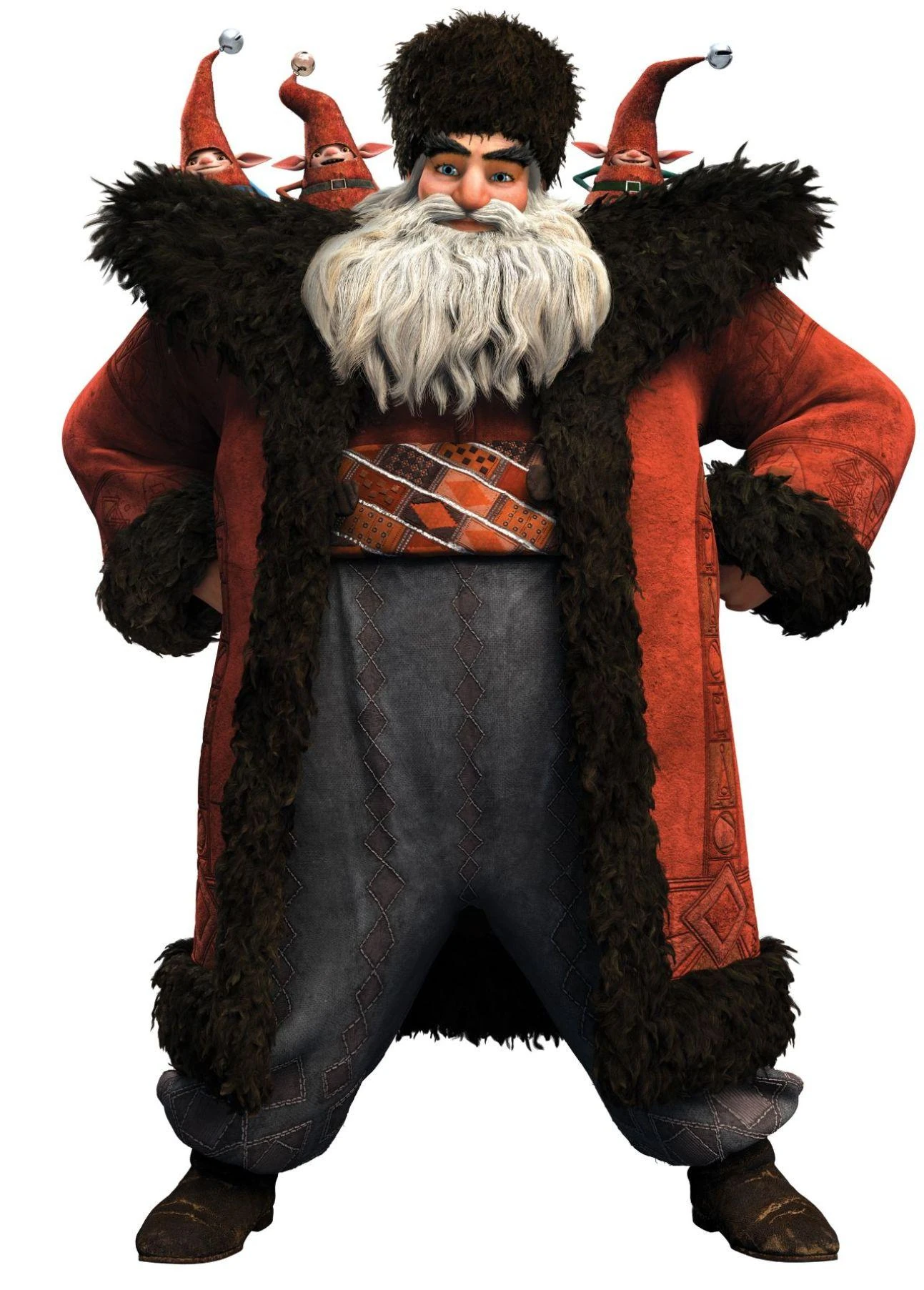
Overall, he has become a major figure in Western society during the winter season. Pop culture likes to play around with the idea of how Santa Claus came to be. Sometimes, he can be adventurous. Other times, he is just a simple good person wanting to do more. Occasionally, he is seen as both.

(Like Russian Santa Claus here)

In 1970, Rankin/Bass released their own take on Santa Claus' origins, a special titles 'Santa Claus is Comin' To Town'.

The narrative of this special is actually from a mailman named Special Delivery, or S.D., Kluger, who addresses the audience of sorts (really just children) through the mailbag.

(See, its appearances like this that make people see stop motion as 'uncanny valley')

So, he explains how the story begins in the town of...Sombertown. It is run by Burgermeister Meisterburger, a rather ill-tempered person more concerned with his own power than anything else. His assistant, Grimsley, brings him a baby from Burgermeister's doorstep, with only the name tag 'Claus' and a note saying to take care of him. Burgermeister just orders Grimsley to take the baby to the orphanage instead. Well, we've found our villain for this special.

Grimsley tries taking the baby during a snowstorm, but loses it during the travels. The baby nearly ends up in the hands of the Winter Warlock, who-

(Woah!)

Uh...but some friendly critters manage to save the baby and deliver him to the a family of elves. The Kringles decide to keep the child as their own, with the elf queen Tanta naming the baby 'Kris'. Kris grows up with the elves, learning how they were great toy makers to the king of the land years ago. Inspired, Kris works on becoming a toymaker himself, hoping to restore their respected name.

Years later, Kris has grown up and makes his way to the closest town to deliver the toys. He encounters a penguin who got lost trying to get to the South Pole (somehow ending up in middle Europe or something) and joins Kris on his journey. I know the penguin has a name, but it really isn't that important to the plot.

Anyway, before Kris actually reaches Sombertown (where else would he end up), Burgermeister gets into an accident with a toy duck and bans all toys until he recovers. Kris didn't really get that memo and starts handing out toys upon his arrival. He even manages to convince the local teacher, Jessica, to get into the fun. However, Burgermeister ends up getting involved as well, wanting Kris to get arrested for delivering the toys. 

No surprise, Kris and the penguin end up escaping the town, but quickly finds themselves in the clutches of the Winter Warlock-

(Gaah!)

-who was actually waiting for Kris to return and dish out some punishment. However, Kris retaliates by giving him a toy train, warming the Winter Warlock's heart and turning him nice.

(Guess he feels a bit embarrassed at scaring Kris)

So, Kris gets a new friend, but is told by Jessica of how the Burgermeister destroyed the toys Kris brought to the kids. The Burgermeister keeps trying to get Kris to stop his toy delivery, but the future Santa Claus couldn't be stopped.

Lock all the doors? Kris goes down chimneys instead.

Daily searches? Kris hides the toys in the socks drying by the fireplace.

Eventually, the Burgermeister wises up and lays a trap for Kris. He ends up capturing Kris, the penguin, all the elves and even Winter himself. Apparently, the former 'Winter Warlock' didn't have all that great power he once had before. 

Jessica ends up being the only one left, wanting to try and free the others captured. She manages to find Winter's cell, but he laments how few magic abilities he has left. The only one that could be significant is some corn that grant reindeer the power of flight. Jessica manages to pull it off and free the captured.

Not long after, the Burgermeister puts out the order to capture Kris on sight, but Kris manages to grow a beard to hide his appearance.

(Genius!)

He also ends up discovering the name 'Clause', which he was original found under. He not only took the name back, but also ended up marrying Jessica to make her Mrs. Clause. Eventually, the group finds a home in the North Pole, building a new house and recieving letters from children for toys. As the years go on, Santa Claus decides that he would go out one day a year (since he was getting tired of weekly trips and the like). The day he picked out ended up being Christmas itself.

In the end, S.D. Kluger recites how that, while there are some people who may not enjoy the holidays, it is important to keep to them and enjoy them. It ends with the titular song as Kluger gets some picks ups from the elves, the penguin and Winter himself along the ride to Santa Claus' home.

Final Thoughts:

This special seemed a bit...off. This is mostly in the story moreso than the animation, which was pretty good for its time. It felt like they needed to fit in a lot of the usual Santa Claus tropes (name, red suit, toy gifting, going down chimneys, etc) and worked on building a story around it all. In some areas, it worked and fell flat in others.

Much like Rudolph before it, it didn't need to have high stakes outside of trying to outsmart the main villain of the special. It certainly felt more casual, laid back, something to watch with family instead of by yourself. Characters are kind of simple, though you could read into a few of them to find them more complex, like the Winter Warlock and even the Burgermeister himself.

In the end, it isn't a major special to see, but it wouldn't hurt to see it at least once.

Next time, we'll see what it is like to have a year without a Santa Claus.

Friday, December 4, 2015

A Rankin/Bass Holiday: Rudolph the Red-Nosed Reindeer

Welcome to the opening winter month of December, with the major holiday shopping starting up around this time as well. What better time to get Christmas-themed set of postings in?

In actually, I'll be focusing on a production company that has had a heavy hand in this: Rankin/Bass Productions. For those unaware, Rankin/Bass is an American company that has been known to produce many seasonal videos and specials, particularly around Christmas. Remember some of those old stop-motion videos they like to show around the holidays? Pretty good shot of them being Rankin/Bass productions. They weren't exactly limited to stop-motion, as they did have a hand in making some hand-drawn work as well. Still, the stop-motion work has been the most remembered of their portfolio, so that will be the focus for this month.

(They've certainly got a large selection to choose from)

I think the best way to start off is with the first stop-motion special Rankin/Bass created: Rudolph the Red-Nosed Reindeer.

(Here is, I'm betting, the memories start flowing back in)

The original story of Rudolph was created in 1939, making it one of the more 'relatively' recent creations to come about in Christmas. The character ended up getting his own song, which explained how a glowing nose casted the poor reindeer out until a foggy Christmas Eve had Santa Claus ask him for help to pull his sleigh. A pretty simple story, all things considered, but timeless enough that it became part of Christmas.

The original stop-motion special clocks in a little under an hour and was broadcast on NBC in 1964. It tells pretty much the same story, but with some new songs and characters thrown in to help extend the runtime.

So, how well does this special hold up after over 50 years? Let's find out.

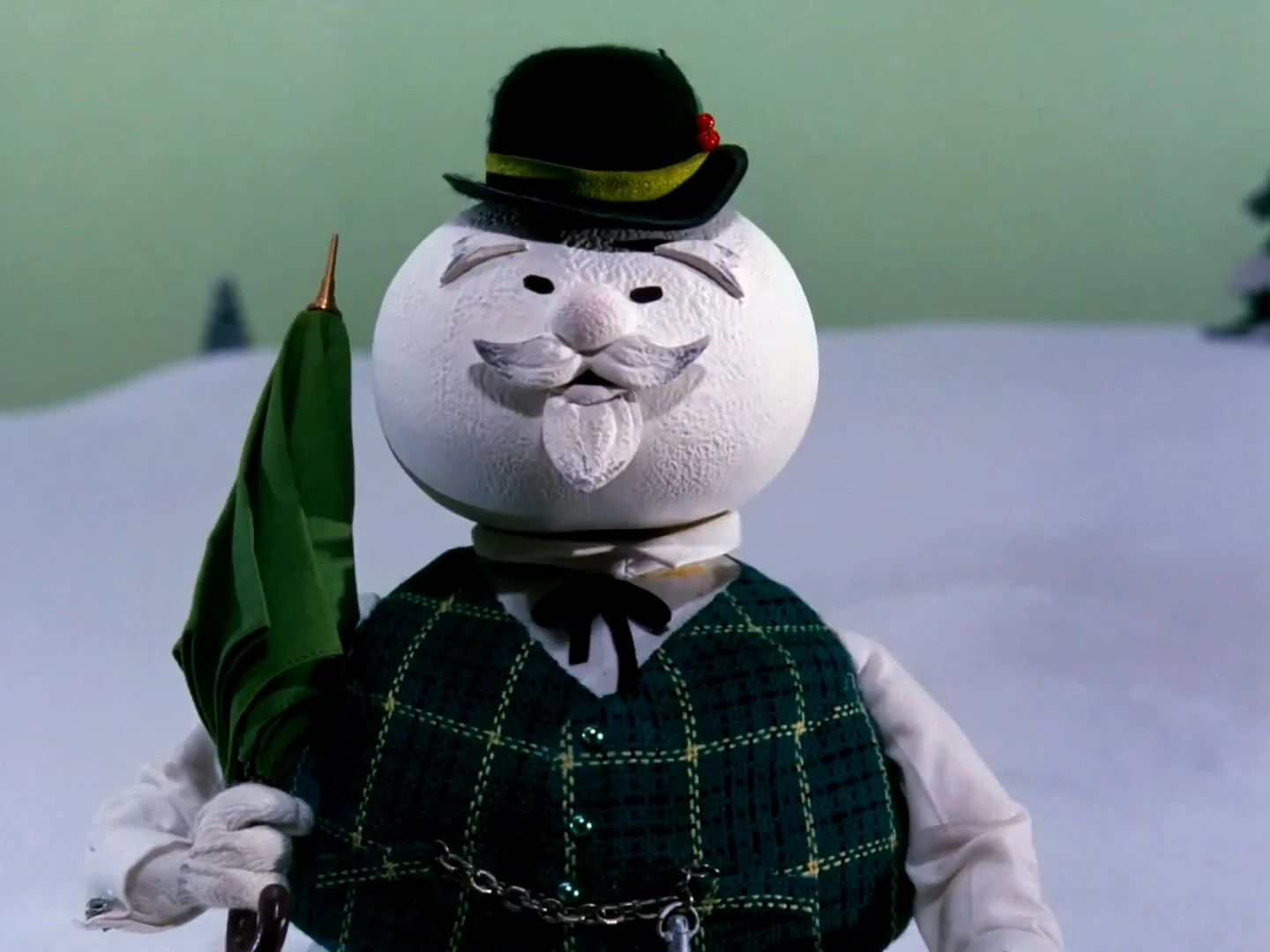
The special takes place through a story (sort of) told by Sam the Snowman.

(I like the cut of his Cardigan)

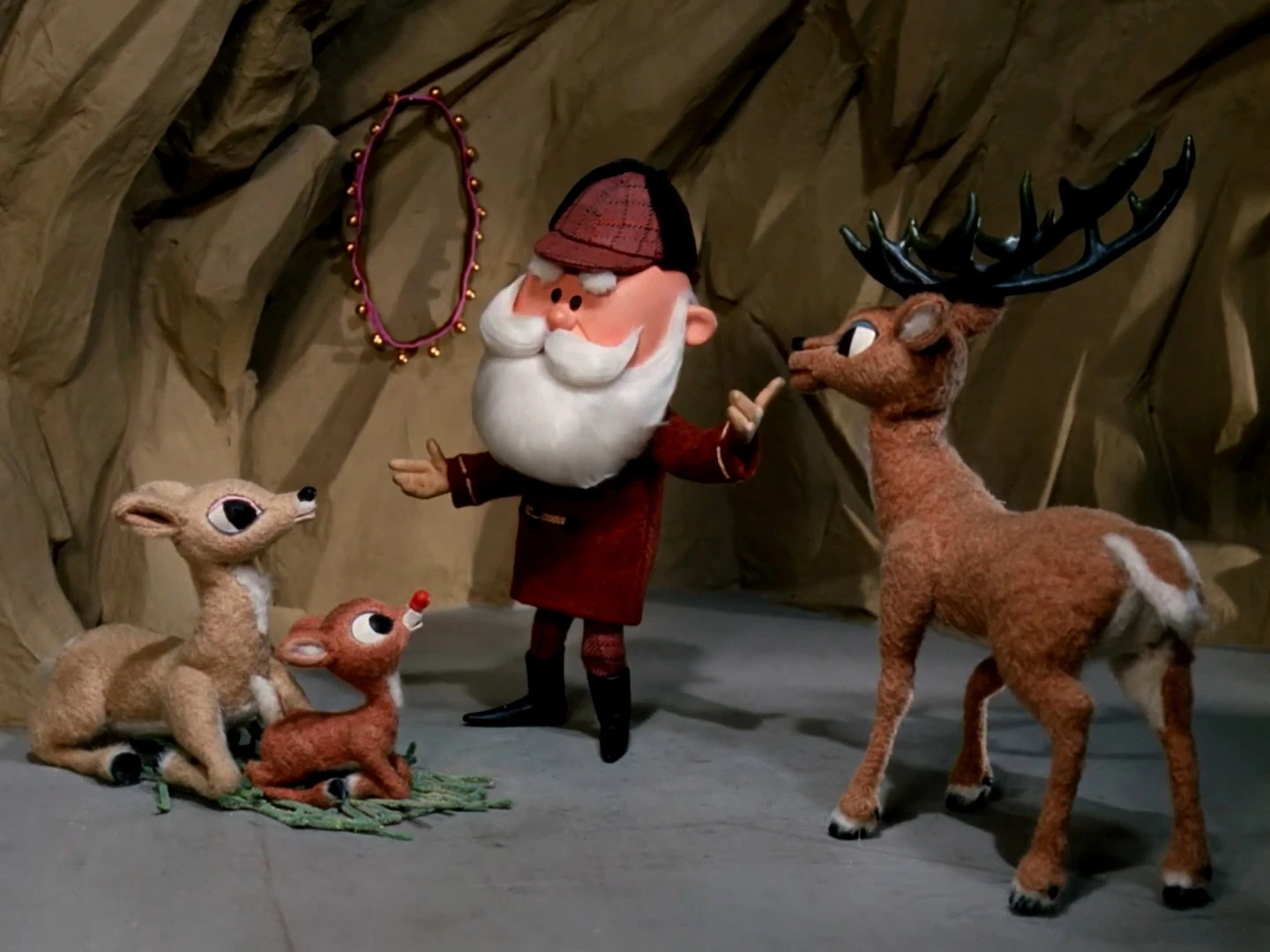
He introduces us to Christmastown, where Santa, the elves and reindeer live and work while preparing for Christmas. Here, we get the introduction (and birth) of Rudolph himself. Here, he is the son of Donner and a female deer (who is only known as Mrs. Donner). After giving Rudolph his name, his red nose starts a-glowing and worries his parents. Santa Claus himself ends up stopping by (a lot slimmer here, probably found a weight loss guide in between trips) to congratulate Donner for the birth.  He brings up how Rudloph will need to be careful with it, lest he becomes unable to help pull the sleigh if it continues.

(Probably bulks up before trips. Maybe helps him keep warm in the cold sky)

Years later, Rudolph is living a relatively normal live, hiding away his 'deformed' red nose through some dirt while trying to make some reindeer friends. He even catches the eye of young female fawn named Clarice. Unfortunately, his red nose gets discovered and he gets laughed off. He soon finds himself an outcast among his own reindeer kind.

Still, he isn't exactly the only one.

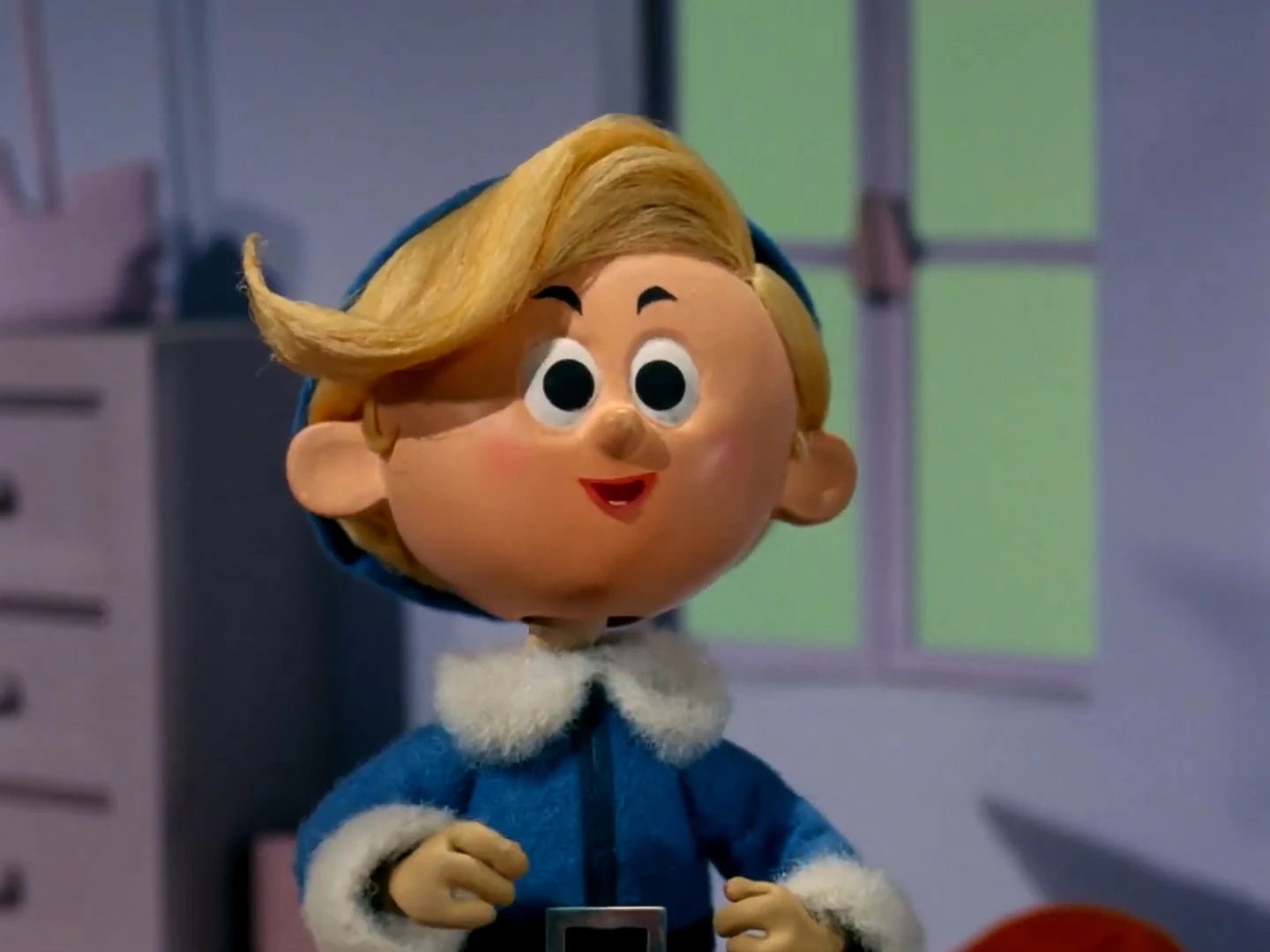
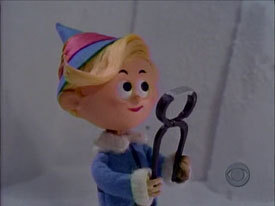
In the toy shop of Christmastown, the elves have been working on new toys, with one Hermey feeling more like becoming a dentist than a toy maker.

(Though from here, it looks like he is ready to snap at a moment's notice)

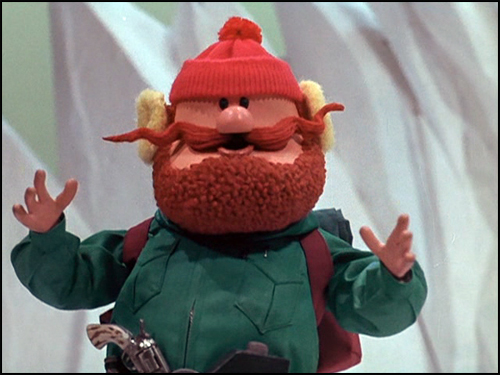
Deciding to head out on his own, Hermey meets with Rudolph, quickly becoming friends and declaring themselves 'misfits'. Unfortunately, they get themselves lost in a snowstorm before being rescued by a prospector named Yukon Cornelius, a rather bombastic fellow.

(I like the cut of his gib...and mustache...and beard)

While the jolly Yukon tries to make a fortune off of gold and silver in the north (this far north, its all ice), they soon encounter-

(Holy Cow!)

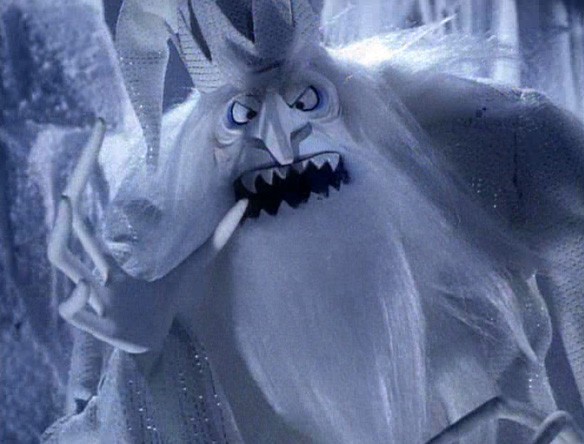
Sorry, but this thing scared the heck out of my as a kid. Our trio of heroes manage to evade the Abominable Snowman by chipping off a piece of ice and sailing that way. Good idea, especially since the monster isn't too fond of swimming.

Back in Christmastown, Rudolph's parents are actually worried for his safety and try to go out and find him, Clarice also accompanying them. Back with our main heroes, they end up arriving on the Island of Misfit Toys. This is where you get such things as the Charlie-in-a-Box (instead of Jack), a spotted elephant, and a train set with square wheels on their caboose. The trio want to stay, but the ruler of the island, King Moonracer (a griffin-like creature) allows them to stay for just a night before they can move on. He does bring up the idea of contacting Santa Claus about the island to give the toys a new home, at least.

Feeling that his own red nose got his friends into trouble (which is sort of true, since it attracted the monster's attention before), Rudolph leaves in the night to find his own path instead. Time passes (whether it is months or years, I couldn't tell), Rudolph grows up and tries to return home. When he finds his home empty, Santa Claus himself makes an appearance to explain how his family went out looking for them. Since Rudolph's father is one of the sleight pullers, Christmas could be canceled.

Well, there is also a snowstorm that hit a few days before Christmas, but lets focus on the search.

Rudolph manages to find a cave, where-

(Good God, its trying to eat one of them!)

Uh, anyway, Rudolph tries to save Clarice and his parents, but gets quickly knocked out. Thankfully, Hermey and Cornelius managed to come across the cave (how convenient) and save a day. Cornelius manages to knock the monster out, while Hermey removes all of its teeth. 

(For Hermey, this is just practice)

Anyway, the ending kind of wraps everything up: Cornelius reforms the monster (after both take a dive off the cliff), Rudolph gets some respect and the chance to pull the sleigh through the storm thanks to his nose, and the misfit toys get picked up to be delivered to new children.

The End...

Final Thoughts on the Special:

It certainly is a timeless piece, wouldn't be able to pin it into one set time (for the most part), though the stop motion has aged a bit since the 1960s. Some of the characters kind of come off as jerks, mostly adults like Donner and even Santa Claus himself (at least in the beginning). It isn't too heavy on plot, mostly about accepting who you are and using what you've got to your best advantage.

Overall, it is an okay movie to watch, easy to sit through and the songs can either be good, catchy, or irritable (depends if you like Christmas music or not).

Next up, lets get into the origins of Santa Claus himself.

Until next time...

Friday, November 27, 2015

Trying to Explain...Toriko

Welcome to the final installment (for now) of 'Trying to Explain...Anime'. In honor of the holiday of Thanksgiving (as well as Black Friday, since it is often treated as a holiday), let us talk more about food.

I can figure out some of you already thinking, "Wait, so there are some manga and anime that focus on food?" Pretty much, yes.

Really, there is a surprising amount of food-based anime that have come and gone. Right now, there is 'Shokugeki no Soma', a manga series dealing with the protagonist training in one of the most illustrious (and incredible tough) culinary schools. The author of the manga collaborated with an actual chef to come up with a lot of the recipes that are used in the story. Also tends to use a lot of metaphors of describing the food, along with imagery that makes them look downright amazing.

There was also the 'Fightin Foodon' series, which had different food and dishes transforming into creatures that fought one another. It certainly fits the more ridiculous side of anime, with a lot more comedy thrown in. It has so much that some would've considered it a rip-off of the 'Pokemon' anime, but it embraces its over-the-top nature to a higher degree than 'Pokemon'.

As for the series today, it certainly places emphasis on food, how to capture it and prepare it for eating. The thing is, getting the ingredients can be a daunting task, one suited only for hunters specialized for such a task.

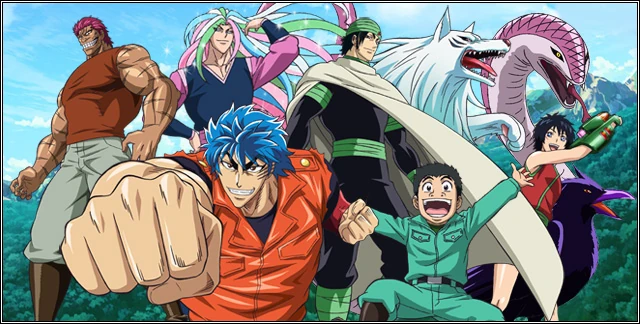
One such 'Gourmet Hunter' is the titular character, Toriko!

(This ain't your typical Shonen anime)

Debuting in 2008, 'Toriko' is a Shonen manga focusing on a cast of characters hunting down the rarest of ingredients, often going to dangerous locales to capture, prepare and eat. Seems simple enough, except for the hundreds of dangers in their world, like powerful monsters capable of destroying cities and organizations bent on capturing the best ingredients for themselves.

The image itself speaks for itself, standing out from the usual shonen stories by subverting old tropes. For example, the titular hero Toriko isn't a kid nor teenager. He's that big blue-haired, muscle bound man in the orange jumpsuit. He is also a Gourmet Hunter, one whose been trained to fight off some of the most monstrous creatures in the world and eat to his heart's content. His body, alongside other Gourmet Hunters, possess 'Gourmet Cells', granting them incredible physiques that can perform amazing techniques. For Toriko, he utilizes a fighting style with his hands as a 'fork' and 'knife' (a clawed and chopping hand respectively), as well as the 'Nail Punch', which allows him to strike an area or person with repeated and focused force.

As with most Shonen stories, Toriko isn't alone in his adventures. He is later joined by his old friend Coco (the guy in black and green) who uses poisons in order to defeat monsters. I'm not talking about setting traps with poisons either: his body is composed of so much poison that he is capable of launching it outwards like bullets and even form into hardened objects like arrows and armor. There is also Sunny, whose flamboyant hair is so long and so strong that it is capable of lifting objects several hundred times his own size. Like Toriko, they are also Gourmet Hunters.

But what is a Gourmet Hunter without a Gourmet Chef?

Enter Komatsu, a chef from a five star restaurant under the IGO Corporation, which helps in maintaining the food supply and research into new flavors and ingredients. While he may not possess the combat skills that would benefit Gourmet Hunters, he does have the fine cooking skill to prepare the captured ingredients for consumption. Also think of him as the eyes of the readers, seeing just how strange this world truly is through the eyes of someone living in it.

(Like this green haired guy attacking the pressure points of this one handed clown)


(How about the massive 'Regal Mammoth', who is miles across big that eats smaller animals through its two nostrils)

(Then there's the time Toriko fought a guy with four arms that uses a GIANT STRAW as a weapon.)

Can't tell if I've already said it before, but anime and manga are so weird.

Anyway, there is a big prize at the end of this adventure. Long story short, the world was involved in an intense war that destroyed millions of lives thanks to food shortages. Thanks to the discover and consumption of legendary ingredients (the chief among them being named GOD), the leaders of the world came to a true and the 'Gourmet Age' was born. Now, Toriko is among the many who go out to see these legendary ingredients, as well as the IGO and villainous groups like the Bishokuyou.

So, are all these ingredients really as great as they sound? Well...

...there is the Rainbow Fruit, a long-thought extinct fruit whose juices are capable of turning an olympic-sized pool into said juice, whose flavor can change seven times in a person's mouth while eating it...

...there is the Jewel Meat, a piece of the dangerous Regal Mammoth, that combines all the tastes of other meats into one, which glistens the air through its bright radiance...

...there is the Century Soup, a rare delicacy that can only be made every one hundred years in the inhospitable 'Ice Hell' continent, whose taste and aura is capable of satisfying those that manage to acquire it (while leaving a dopey smile across their faces)...

...okay, I'm getting hungry just thinking about it. Thankfully, that is why we have Thanksgiving leftovers.

Until next time...
Friday, November 20, 2015

Trying to Explain...Ouran High School Host Club

Continuing on with trying to explain some anime series, I'm keeping to the theme of 'comedy' while also wanting to talk a bit more about the 'shoujo' genre of manga.

For those who are unaware, 'shoujo' manga is the equivalent of 'shonen' manga, instead focusing on girl readers instead of boys. It focuses more on female protagonists instead of males, tends to have more romantic plots and story resolutions that have characters grow as, well, characters. It has also been know to feature a lot of homosexual relationships, whether it is between boys (called yaoi) or between girls (called yuri). It doesn't exactly go to the levels were it would be referred to as 'josei' manga (more for older women), but it is an easy point for people to make light fun with (nothing serious, of course).

Something else that would need an explanation would be the 'host club'. Think of it as a 'home away from home' for female workers of hostess clubs, where instead of pampering overworked salarymen, they are the ones pampered instead. Sex isn't involved, just a lot of flattery and flirting at a cost rate that could make your heads' spin.

Here, we have the 'Ouran High School Host Club', which can be considered the PG version of a standard host club. A group of boys in a high school for the ultra rich host (get it?) the club as a means to spend some free time with the girls of the same school. A new arrival ends up in debt to them due to breaking something expensive, so they must work for them until the debt is paid off (which tends to build on occasion). They quickly find out the new arrival isn't actually a boy, but a girl, which they try to hide so that they don't get into too much trouble (I think). Don't worry about this, since its actually revealed in the first episode.

(Though, now you have the pleasure of figuring out which is the girl. Good luck.)

Let me at least go through the main cast, so that you can figure out where everyone fits in the group.
We have:

  • Kyouya Otori, the business end of the host club, managing all their finances with an air of calm to counteract the group's buffoonery, 
  • The twins, Hikaru and Kaoru Hitachin,
  • Mitsukuni Haninozuka, also known as 'Hani' (pronounced 'Honey') is the small scale student who is actually one of the oldest students in the group,
  • Takashi Morinozuka, also known as 'Mori', who is actually the friend/bodyguard to Hani due to their families,
  • and we have Tamaki Suoh, the 'leader' of the Ouran Host Club with a flair for the dramatic (and goofiness, at least unintentionally).
Actually, wait, I'm leaving out one person. Haruhi Fujioka, the newest student of the ultra rich high school.

Yep, probably took you awhile to realize it too.

(The wonders of modern cosmetics and human gullibility)

Considering how there are female voice actors that also voice young male characters, it may actually come off as a surprise to anyone watching it the first time. After all, the twins and 'Hani' are also voiced by female voice actors (both in the original Japanese and English dub).

Really, the series is quite light-hearted while still having moments of drama and comedy tossed in from time to time. Not to mention some character development not just for Haruhi, but also most of the host club members themselves. It also tends to parody the 'shoujo' style of manga stories while also embracing it.

Keeping that in mind, I don't see many male viewers grabbing onto this as quickly as you would think. Some may not want to gravitate to something considered 'girly' and would do better to ignore it. Not to mention people who don't understand how characters like 'Hani', Kyouya or Tamaki are popular both within the show and without.

In the end, it is a rather well-done parody that highlights 'shoujo' style manga while also showing off what makes it popular.

Until next time...

Friday, November 13, 2015

Trying to Explain...Shimoneta

Going to continue this month's themes of trying to explain some of the different anime and manga. This next one deals with a subject matter that is quite familiar to a lot of people: censorship. People want to protect their children from inappropriate acts such as dirty jokes, extreme violence, and foul language. It isn't bad in of itself, but it can be pushed to extremes that would do more harm than good. This is where this series comes in.

Debuting in the summer of 2015, we have...Shimoneta!

(A world which George Carlin himself would rebel against.)

In truth, the full title of the series is "Shimoneta to lu Gainen ga Sonzai Shinai Taikutsu na Sekai", which comes out translated as "A Boring World where the Concept of Dirty Jokes Doesn't Exist". Yeah, its an interesting subject matter to tackle in anime, a medium that can get into more 'risque' matters. However, there is a clear point in this case.

For some who are unaware, Japan is a lot more strict in its day to day lifestyle than one would initially think. A lot of jobs, from the white collar to blue collar, tend to put a focus on their work and ignoring outside distractions. Anime is an outlet for those emotions put away, as to help balance that lifestyle of hard work and hard play (at least how I'm trying to view it). Think of it as going to a strict school, where you need to be on your best behavior, but once you get back home, you can be more open and expressive with your more 'expletive' interests. Its all about finding that balance.

Still, there are those who want to push the boundaries further on what could be subjected or not. There may be good reasons behind it, but not always to the support of the whole population. Going too extreme with it may lead to some unfortunate problems in the future. This anime happens to capture that a lot more than some would realize.

(Though, you get stuff like this makes it hard to take it seriously)

The story is actually set years after the more heavily-enforced censorship laws were set in Japan (where sex education films were shown involving insects, not people). People care constantly monitored to watch their behavior and language, even amongst students. Tanukichi Okuma, one of our main characters, ends up discovering the identity of a 'ero-terrorist' Blue Snow, who is actually member of his school's student council, Ayame Kajou (aka, the girl in the pic above). As a result, she ropes him into her activities as part of SOX, as a means to spread sexual education (sometimes) to inform the improperly informed, usually while waiting underwear over their faces (anime, after all).

So, what exactly has me personally so surprised with this anime? In a way, I kind of look at it as a social commentary of taking sexual censorship too far. Aside from a sex education film that features insects mating, information on subjects human conception and 'flirting' are close to nil. That's kind of important information to keep open, especially if you want to keep the human race going. This is especially true if you want someone to avoid nearly committing rape cause they were unfamiliar with the difference between love and lust.

Enter Anna Nishikinoyama.

Anna is the leader of the student council of the same school as Ayame and Tanukichi. She had been raised to keep down anything considered 'dirty', despite having no knowledge of what they could be. She is still considered nice, though ends up locking lips with Tanukichi after the latter saved her from a minor attack (both ended up falling down, Tanukichi on top of Anna.) She ends up falling in love with him, but her pursuit for the same love in return is a bit...extreme.

Despite being raised in an environment that holds clean morals high and dismisses the obscene (thanks to her parents), Anna is unable to properly display her affection in a way deemed 'appropriate'. This has led to very uncomfortable situations between her and Tanukichi, particularly when other women are involved. The extremes she goes to often involve breaking out violent maneuvers in order to get her way, like threatening someone with a knife after pinning them down to the ground. She believes in her pursuit of love to be 'just' and 'pure', not realizing her methods make more along the lines of a sexual predator.

Really, her behavior is more along the lines of a 'yandere', one who is crazy in love with someone and willing to commit violent acts to get their 'affection'.

(Now you can put a face to the crazy. Enjoy!)

So yeah, another anime series many can write off as being immature also has some deeper meaning to it regarding today's social issues.

Don't get me wrong, there are some people out there who won't get into this kind of anime for its inappropriate content. Its okay, since it isn't being forced on them (or at least it shouldn't be). But there is far worse than this out there, often for a quick buck. When you get some real thought put into this kind of subject matter, it certainly stands out more.

Be sure to catch it online on sites like CrunchyRoll and Funmination.

Until next time...

Saturday, November 7, 2015

Trying to Explain...Jojo's Bizarre Adventure

Yeah, had a thought recently about some of the anime and manga coming from Japan. Some of this is pretty straight forward, but others can be a bit...weirder (by Western standards, anyway).

Figured it would make for an interesting theme this month: trying to explain a few popular, but still somewhat out there manga and anime series for those who aren't familiar with the medium. We're going to going into a bit of spoiler territory, so please keep that in mind.

First up is a series that I've started getting into recently: Jojo's Bizarre Adventure!

(One Big Dysfunctional Family)

Oh boy, where do we begin? Okay, the series was created by Hirohiko Araki back in the 1986 that was part of Shonen Jump until 2004, when it was soon published by seinen magazine Ultra Jump. For anyone unfamiliar with the terms, 'Shonen' refers to younger readers between 8 and 18 (give or take), while 'Seinen' refers to an older audience. Considering how much stuff you can get away with Shonen manga, it says a lot of what Seinen manga is capable of.

Anyway, the series is considered an action adventure with elements of the supernatural, horror and thriller tossed in. It is a generational story, focusing on the members of the Joestar family as they fight against evil. The earliest part of the story takes place in the 1880s and stretches onward into the 2000s and even alternate realities. We're just getting started here, so please hold on to your seats.

As you can no doubt tell by the above picture, a lot of the characters can be rather...flamboyant. It is part of Araki's way of parodying manga like 'Fist of the North Star', which features a more serious and manly protagonist treated as a 'man's man'.  Hence, what we got here is a but of equally manly-men (and women) who tend to pose in outrageous ways from time to time. Humor is also tossed in, which helps set the series as truly 'bizarre'.

I will give in with a few details of the first couple of story arcs (for lack of a better word) of this massive series.

It all starts in the 'Phantom Blood' arc, taking place in the 1880s with an English nobleman named Jonathan Joestar. His life changed when his father adopted a street urchin named Dio Brando. With nothing but pain and suffering to inflict on the world, Dio utilized an ancient Aztec mask to become a vampire and try to take over the world. Jon himself steps in to try and stop him, learning the ways of 'Hamon' martial arts to fight him. Here, 'Hamon' is utilizing hot blood cells in the body for attacks, making it an excellent counter against the cold heart of vampires like Dio.

The next story, 'Battle Tendency', picks up in 1938 during World War 2. Jonathan's grandson, Joseph Joestar, ends up wrapped up in the story to stop a group called the 'Pillar Men'. As it turns out, this group was ressurected by the Nazi occultists to try and win the war, but end up going their own to try and conquer the world. They were also the ones who originally created the Aztec mask from the previous story. 'Hamon' is once again brought up and utilized to combat the 'Pillar Men', though utilized in a different form through the clever Joseph.

The third story is 'Stardust Crusaders', taking place in the 1980s, with Jotaro Kujo. The grandson to Joseph Joestar, he must track down and defeat an evil that has corrupted his mother in order to save her life. He ends up traveling halfway around the world and must combat dangerous enemies alongside new allies. Here, the combat changes from the 'Hamon' style into the more psionic/spiritual manifestation of 'Stands'. These are created by an intense force from a person, often manifesting in different forms depending on their abilities. The names for these 'Stands' range from Tarot cards to Egyptian gods to even musicians and bands.

(Plus it helps that the first three actually have their stories adapted to anime)

Speaking of musicians, Hirohiko Araki enjoys a lot of Western music, particularly the rock genre. Hence, if you look at a lot of the characters and stands, you can point out the different references they make to music. For example, the villain of the first arc, Dio Brando, is named after rock metal legend Ronnie James Dio. Also in the first arc is Robert Edwards O. Speedwagon (after the group REO Speedwagon) and Will A. Zeppeli (named after the band Led Zeppelin). Other references are dotted throughout the series, such as :

  • The 'Pillar Men' are named Santana (after the rock band of the same name), Esidisi (after the rock band AD/DC), Wammu (after the band Wham!), and Kars (the new wave rock band The Cars). 
  • Mohammed Avdol from 'Stardust Crusaders' is named after the musician Paula Abdul.
  • Jean Pierre Polnareff from the same series is named after french musician Michel Polnareff.
  • A villain from 'Stardust Crusaders' was named Steely Dan (like the musician, of course), but translation changes made him into 'Dan of Steel'.
Judging by that last name, you can see how the translation meanings have shifted from East to West. Copyright laws a bit different in Japan than in the US, enabling Hirohiko Araki to get away with naming much of his characters after musicians without needed to worry about royalty fees or the like. When it came time to translate the series into the West, that was when the fees hit and it has become a bit of a problem for a few decades. They figured away around it by altering some of the more noticeable names into different ones, like the 'Steely Dan' name from before and others, like a character named Vanilla Ice (after the white rapper of the same name) became Cool Ice. It worked out, especially since we've gotten the aforementioned anime series recently.

The series itself is more fascinating than meets the eye. Even after all these years of being unable to be properly brought to the West, 'Jojo's Bizarre Adventure' has managed to gain and sustain an audience to last through several volumes of stories. From action to drama, supernatural to comedy, the story managed to jump through genres like it was no big issue. Really, I don't blame people for having such a hard time getting into it. Hopefully now, you'll have a better understand once you get through the first few stories.

I recommend starting in the beginning of each story arc, of course, as a jumping on point. Whether it be 'Phantom Blood' or 'Stardust Crusaders', the earlier arcs are a good way to understand just what is going on in that universe.

Until next time...